
-
Esoteric Gifts
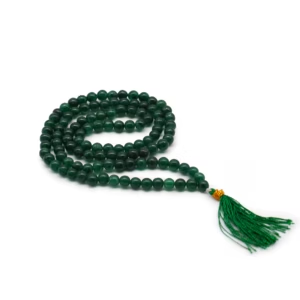
108 Bead Mala – Jade
£28.74 Add to basket- Handcrafted 108 Bead Mala made with natural green jade.
- Designed to invite balance and harmony, ideal for meditation or daily wear.
- Can be worn as a layered bracelet or a long necklace.
- Each mala features unique variations in color and texture due to natural stone.
-
Esoteric Gifts
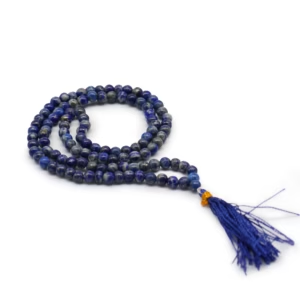
108 Bead Mala – Lapis
£38.34 Add to basket- Handcrafted 108 Bead Mala made with natural Lapis Lazuli.
- Designed to deepen inner wisdom and enhance intuition.
- Functions as a traditional meditation tool or a sophisticated necklace.
- Beads measure 0.6 cm to 0.8 cm; total length ranges from 60 cm to 80 cm.
-
Esoteric Gifts
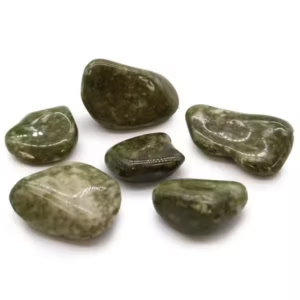
African Tumble Stones – Epidote Snowflake – Large – 6pcs
£10.74 Add to basket- Large African Tumble Stones – Epidote Snowflake set with 6 authentic, polished stones.
- Features characteristic lighter green and white tones with snowflake-like patterns due to higher quartz content.
- Each stone measures approximately 30mm to 50mm, ideal for display or personal use.
- Perfect for home decor, collectors, or as a unique esoteric gift.
-
Esoteric Gifts
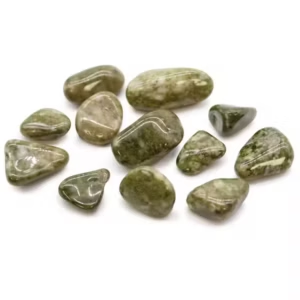
African Tumble Stones – Epidote Snowflake – Medium – 12pcs
£11.94 Add to basket- Medium African Tumble Stones – Epidote Snowflake 12Pcs, featuring natural minerals with a distinct mottled green and white appearance.
- Each stone is polished to a smooth finish, highlighting the natural patterns and lighter color tones from its high quartz content.
- Sourced from Africa, these medium-sized stones range from 25mm to 45mm, ideal for display, collections, or personal use.
- This 12-piece set is perfect for enhancing your living space, carrying as a personal talisman, or as a thoughtful gift.
-
Esoteric Gifts
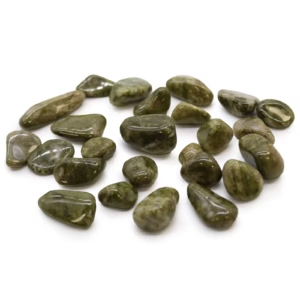
African Tumble Stones – Epidote Snowflake – Small – 24pcs
£7.14 Add to basket- Small African Tumble Stones – Epidote Snowflake, a 24-piece set.
- Features mottled khaki and pistachio green colors with white quartz for a snowflake-like appearance.
- Each stone is unique, ranging from approximately 10 to 30 mm.
- Sourced from South Africa, ideal for collectors or home decor.
-
Bracelets
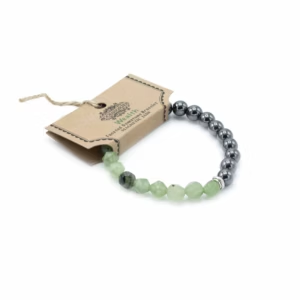
Faceted Gemstone Bracelet – Magnetic Jade
£11.94 Add to basket- Faceted Gemstone Bracelet featuring jade beads cut to reflect light for a sparkling appearance.
- Jade is traditionally associated with balance and stability, offering a touch of elegance and tradition.
- Simple and understated design, ideal for everyday wear or layering with other gemstone bracelets.
- Versatile accessory suitable for gifting or enhancing your personal style.
-
Bracelets
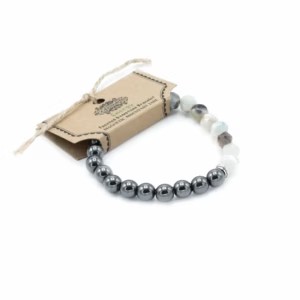
Faceted Gemstone Bracelet – Magnetic Mountain Jade
£11.94 Add to basket- Delicate and versatile Faceted Gemstone Bracelet featuring Magnetic Mountain Jade.
- Small, faceted stone beads catch and reflect light for a subtle sparkling appearance.
- Minimalist design allows for standalone wear or stacking with other jewelry.
- Made with Mountain Jade, known for its serene green hues and association with balance.
-
Bracelets
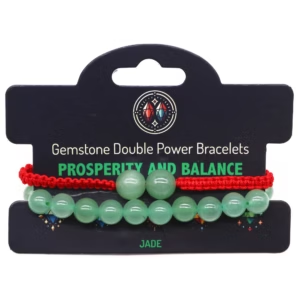
Gemstone Double Power Bracelets – Jade
£13.14 Add to basket- Gemstone Double Power Bracelets feature high-quality natural jade beads.
- The stretchy elastic design ensures a comfortable fit for most wrist sizes.
- Choose from dark brown, black, or red string options to personalize your style.
- Each bracelet includes a headcard explaining the traditional symbolic benefits of jade.
-
Esoteric Gifts
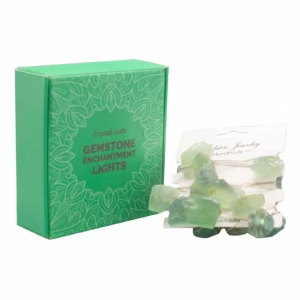
Gemstone Enchantment Lights – Crystal Jade
£22.74 Add to basket- Gemstone Enchantment Lights – Crystal Jade feature 20 genuine crystal jade pieces.
- Emits a serene green glow, perfect for creating a peaceful sanctuary.
- Conveniently powered via a USB connector, compatible with various devices.
- Measures 227cm in total length for versatile decorative styling.
- Designed for indoor use, ideal for bedrooms, living areas, or meditation spaces.
-
Massage Tools
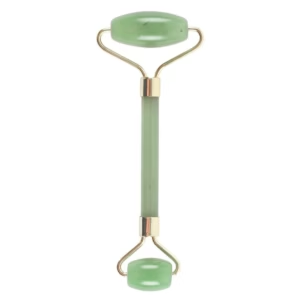
Gemstone Face Roller – Jade
£21.54 Add to basket- Authentic jade facial accessory for daily skincare rituals.
- Dual-ended Gemstone Face Roller with two stone sizes for different facial areas.
- Natural cooling properties provide a soothing and refreshing sensation.
- Supports micro-circulation and helps reduce the appearance of puffiness.
- Promotes relaxation and helps alleviate facial tension.
-
Massage Tools
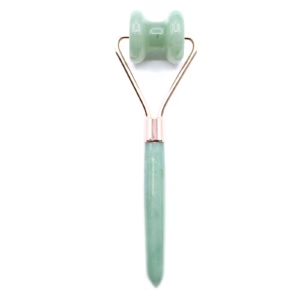
Gemstone Jawline Roller – Jade
£21.54 Add to basket- Authentic jade jawline roller by AW Cosmetics, weighing 55g to 65g.
- Features a dual-pronged gemstone head contoured for facial curves.
- Provides a naturally cooling and soothing massage experience.
- Ideal for enhancing skincare routines and applying serums or oils.
- Compact 15cm length for easy storage and travel.
-
Bracelets
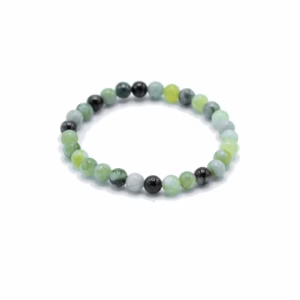
Gemstone Manifestation Bracelet – Olive Jade – Healing
£8.34 Add to basket- Handcrafted Gemstone Manifestation Bracelet featuring genuine olive jade beads.
- Showcases soothing green shades, reflecting natural variations for a unique character.
- Designed to symbolize renewal and holistic well-being.
- Versatile accessory, perfect for daily wear or as a thoughtful gift.
-
Massage Tools
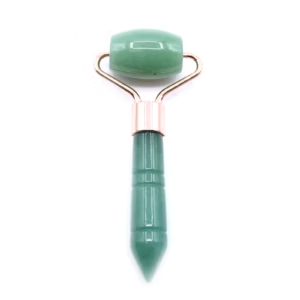
Gemstone Mini Roller – Jade
£13.14 Add to basket- Portable Gemstone Mini Roller crafted from authentic jade.
- Compact size (9cm length, 30-34g weight) for easy travel and precise application.
- Naturally cool jade stone provides a soothing sensation for delicate facial areas.
- Ideal for integrating traditional massage into your daily skincare routine.
-
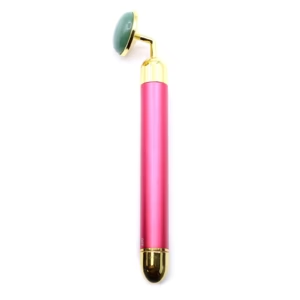
Massage Tools
Gemstone Vibration Pad – Jade
£19.14 Add to basket- The Gemstone Vibration Pad – Jade combines natural jade with a battery-operated vibration feature for a calming experience.
- Crafted with authentic jade, this compact tool weighs 70-73g and measures 15.5cm x 2.5cm x 3cm.
- Ideal for daily beauty or relaxation routines, offering a cooling sensation and gentle massage.
- Requires one AA battery (not included) for cordless convenience.
-
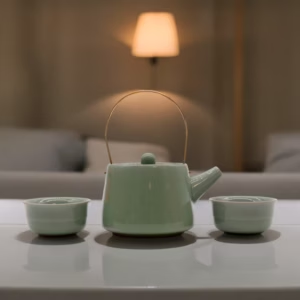
Kitchen & Accessories
Herbal Jade Teapot Set – Pot & Two Cups
£16.74 Add to basket- Ceramic teapot and two cups with a smooth jade green finish.
- Features an elegant gold-toned handle and ergonomic spout for easy pouring.
- Teapot capacity of 200ml, with two matching 50ml cups.
- Ideal for enjoying loose leaf or herbal infusions.
-
Esoteric Gifts
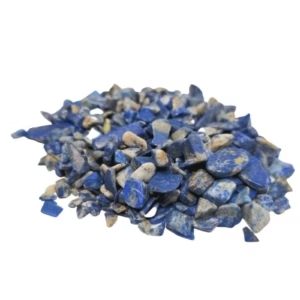
Lapis Gemstone Chips Bulk – 1KG
£52.74 Add to basket- 1KG bulk package of Lapis Gemstone Chips for crafts and decor.
- Features deep, vibrant tones and natural, irregular shapes.
- Ideal for filling decorative containers, terrariums, resin art, or aquariums.
- Versatile for home styling, craft projects, and even jewelry making.
-
Notebooks
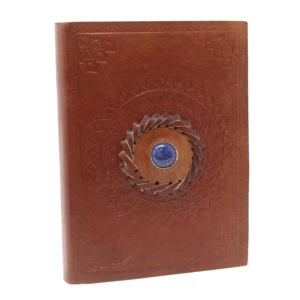
Leather Lapis Notebook 17x12cm
£22.74 Add to basket- Handcrafted Leather Lapis Notebook with genuine leather covers and lapis lazuli details.
- Features 200 pages of eco-friendly paper, ideal for writing, sketching, or journaling.
- Designed with vintage elements including metal clasps, buckles, and wrap-around thongs.
- Compact 17×12 cm size for easy portability and on-the-go use.
-
Orgonite Power Items
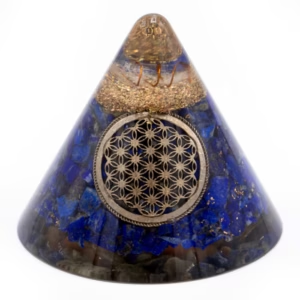
Orgonite Cone – Lapis Flower of Life – Suspended Quartz – 90 mm
£45.54 Add to basket- Handcrafted 90 mm Orgonite Cone featuring Lapis Lazuli chips and a suspended quartz crystal.
- Made with catalyzed fiberglass resin, metal shavings, and powders.
- Displays the sacred Flower of Life symbol for aesthetic and symbolic value.
- Ideal for display in various home or office settings, or as a thoughtful gift.
-
Orgonite Power Items
Orgonite Obelisk Power Point Copper, Lapis and Yellow Aventurine – 90×25 mm
£21.54 Add to basket- Handcrafted Orgonite Obelisk Power Point, 90×25 mm.
- Features copper, Lapis Lazuli, and Yellow Aventurine in a clear resin base.
- Designed to balance personal environments and enhance your space.
- Ideal for desks, bedside tables, or meditation altars.
- Artisan-made in India, each piece offers a unique appearance.
-
Orgonite Power Items
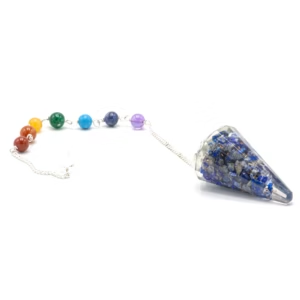
Orgonite Power Chakra Pendulum – Lapis
£9.54 Add to basket- Orgonite Power Chakra Pendulum – Lapis for energy work and dowsing practices.
- Crafted from catalyzed fiberglass resin and metal shavings, with Lapis Lazuli.
- Ideal for reiki, divination, and cleansing negative energy.
- A durable, weighted tool for radiesthesia, rooted in ancient traditions.
-
Bracelets
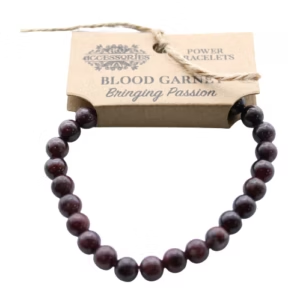
Power Bracelet – Blood Garnet
£11.94 Add to basket- The Power Bracelet – Blood Garnet features genuine 8mm garnet gemstones with a rich, deep color.
- Its elasticated stretch design ensures a comfortable one-size-fits-all fit for various wrist sizes.
- This versatile accessory complements any personal style, from formal to casual.
- An ideal and thoughtful gift for birthdays, anniversaries, Christmas, or Valentine’s Day.
-
Bracelets
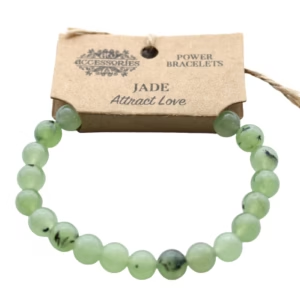
Power Bracelet – Jade
£10.74 Add to basket- Power Bracelet – Jade with genuine 8mm jade gemstone beads.
- Features a flexible stretch cord for a comfortable, adjustable fit on most wrists.
- Versatile design transitions seamlessly from casual to formal wear.
- Each bracelet is unique due to natural variations in the jade.
-
Esoteric Gifts
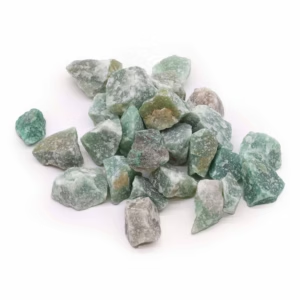
Raw Crystals – 500g – Crystal Jade
£20.34 Add to basket- Raw Crystals (500g) – Crystal Jade, natural jadeite gemstones.
- Lush green, unpolished specimens for an authentic look.
- Ideal for home decor, gemstone collections, or as a symbolic gift.
- Historically associated with tranquility, balance, and prosperity.
- Each pack contains approximately 500 grams of raw jadeite.
-
Inspirations
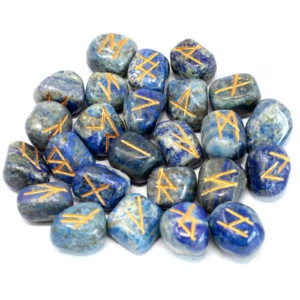
Runes Stone Set in Pouch – Lapis
£53.94 Add to basket- This Runes Stone Set in Pouch – Lapis offers a meaningful way to engage with ancient traditions.
- Crafted from deep blue lapis lazuli, this set includes 25 stones (24 engraved, 1 blank).
- Each piece is made from natural lapis lazuli gemstone with a smooth, tactile finish.
- Comes with a convenient soft pouch for safe storage and easy travel.
- Ideal for meditation, divination, or as a unique gift for collectors of minerals.
-
Esoteric Gifts
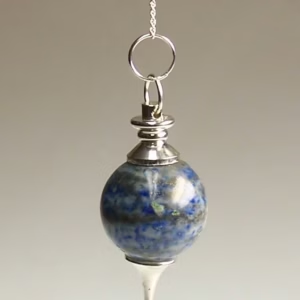
Sphere Pendulum – Lapis
£14.34 Add to basket- Sphere Pendulum – Lapis crafted from genuine lapis lazuli for intuitive practices and dowsing.
- Features a smooth spherical design for balanced movement and precise responses.
- Suspended from an approximately 170mm silver chain with a matching gemstone bead for easy handling.
- Handmade, ensuring each pendulum is unique with slight variations in size and color.
- Portable tool for divination, energy healing, and connecting with your subconscious mind.
-
Necklaces & Pendants
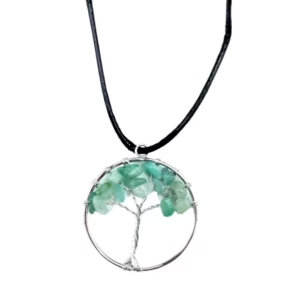
Tree of Life Pendant – Jade
£7.14 Add to basket- Features a genuine jade gemstone with natural green variations and calming energy.
- Detailed Tree of Life motif symbolizes harmony, abundance, and interconnectedness.
- Crafted with intricate metalwork for a sophisticated and timeless appearance.
- Versatile design suitable for casual wear or as a meaningful personalized gift.
- Easily slides onto your favorite chain or cord using the integrated bail.
-
Esoteric Gifts
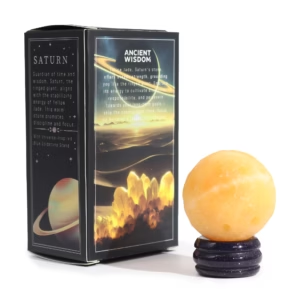
Yellow Jade Planet on a Sola Goldstone Stand – 40mm – 30x15mm Stand
£22.74 Add to basket- Decorative 40mm yellow jade sphere, representing the planet Saturn, with a smooth, polished finish.
- Includes a 30x15mm sola goldstone stand, designed to evoke the shimmering depths of the cosmos.
- Ideal for collectors of esoteric gifts or as a meaningful addition to home or office decor.
- Combines warm yellow jade with dark, glittering goldstone for a balanced aesthetic.

Shopping Basket


